


We live in a time when originality is taken for granted as a prime virtue of artistic expression, in music as well as in most other art forms. But this hasn’t always been the case. In earlier centuries, composers were celebrated and rewarded more for working effectively within the confines of clearly laid-out stylistic conventions than for breaching those conventions, or even for coming up with and developing new musical ideas. It’s also true that for centuries, music was created more for functional purposes than as a vehicle for self-expression: composers of the Renaissance, baroque, and classical periods were often hired by chapels and cathedrals to create music suitable for worship; others were hired by kings and dukes to write music designed to celebrate their patrons or entertain their guests at events. In none of these contexts were the employers generally looking for musical innovators to push the envelope and expand the boundaries of musical style – they were paying for pleasant and uplifting music designed to serve particular functions, either sacred or secular. (In fact, more adventurous composers would sometimes get in trouble with their employers, including the Church, for getting too fancy and self-indulgent. In a liturgical context, even extending a syllable of sung text over too many notes could get you into hot water.)
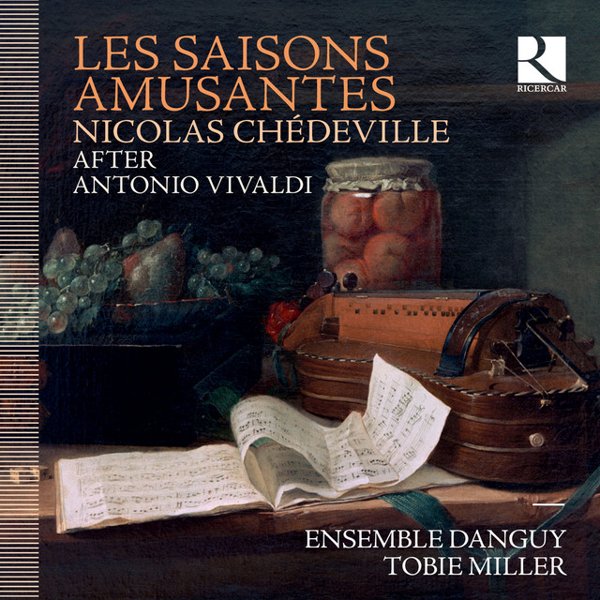
During these periods, then, it shouldn’t be surprising that composers not only drew on existing music, they often reused material they had previously written for other purposes; Johann Sebastian Bach, Antonio Vivaldi, and Georg Friederich Handel regularly recycled musical content from sonatas into concertos, or from large-scale vocal works to chamber music. (It was also very common for chamber music to be published with the understanding that the melody part would be played by whatever instrument the performer was proficient in – flute, violin, oboe, etc.) At a time when copyright law was in its infancy it was also widely accepted practice for composers to pilfer melodies from each other, and doing so was often considered an act of homage. In the Renaissance period, in particular, composers often wrote entire Masses based on folk melodies, Gregorian chant tunes, or motets written by others.
This tendency continued somewhat into the Romantic period – Franz Schubert, for example, recycled melodic material from his lieder into string quartets, while Johann Nepomuk Hummel created chamber-ensemble arrangements of Ludwig Van Beethoven’s 4th symphony – but with the change in musical fashion came an increased expectation of uniqueness and individualism among musical artists. By the 20th century, it was generally expected not only that composers would always come up with their own musical ideas, but also that they would push the boundaries of style and propriety in the name of originality and innovation. This isn’t to say that the music world ignored or denied the reality of musical influence – only that musical originality became a goal in itself to a degree that had not generally been the case before.
But even at a time when enfants terribles like Edgard Varèse (pioneer of musical collage and forefather of sampling) and John Cage (inventor of the prepared piano) were gleefully exploding musical convention, composers continued to recycle, reconfigure, and re-envision older and classic works. Feruccio Busoni, a modernist known for his experiments in atonality and microtonalism, also famously transcribed many of Bach’s organ works for the piano, while Anton Webern – star pupil of twelve-tone atonalist Arnold Schoenberg – rearranged material from Bach’s legendary counterpoint exercise A Musical Offering. Richard Strauss wrote a divertimento for chamber orchestra based on keyboard compositions of the French baroque composer François Couperin, and Maurice Ravel created an orchestral version of Modest Mussorgsky’s programmatic masterpiece Pictures at an Exhibition that has eclipsed the original version in popularity.
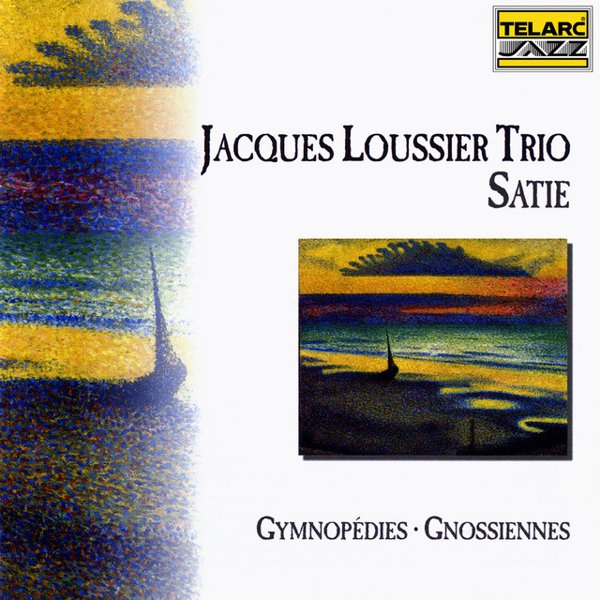
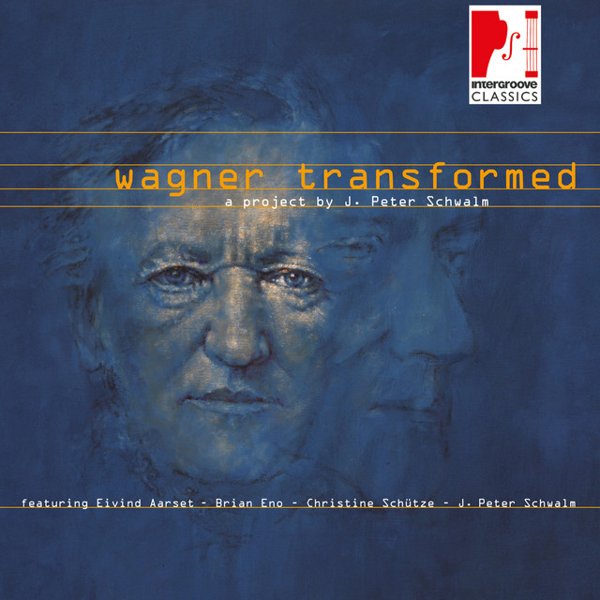
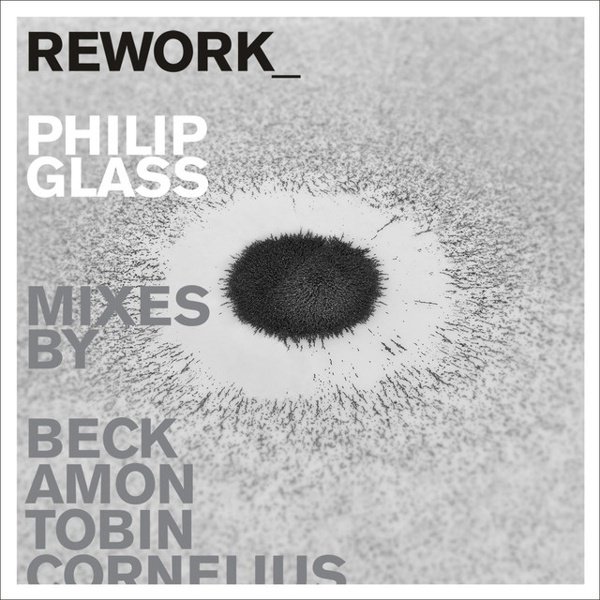
It was in the later years of the twentieth century and the early years of the twenty-first that musical recycling began to get really interesting, as experimental and pop musicians started using the work of classical composers both ancient and contemporary as raw material for their own new – though literally derivative – creations. Today, remix collections of work by 20th-century minimalists Steve Reich and Philip Glass rub shoulders on the record-store shelves with ambient reworkings of Wagner operas and jazz arrangements of baroque music by Bach and turn-of-the-century impressionistic piano works by Erik Satie.
Of course, throughout musical history composers have always absorbed the influence of earlier musicians and incorporated that influence in a more organic way as well, creating work informed by rather than derived from that of their predecessors. Ludwig Van Beethoven’s boundary-pushing orchestral and piano works would hardly have been conceivable if Wolfgang Amadeus Mozart and Franz Joseph Haydn hadn’t so thoroughly explored and developed the high classical sound on which his innovations were based; Arnold Schoenberg, pioneer of twelve-tone serialism, theorized an approach to counterpoint that could hardly have sounded more different from that of Bach and other baroque composers, but was also deeply based on the contrapuntal theory he had admired and absorbed from Bach’s work.
Sometimes, when contemporary composers have looked back in time for inspiration, they have ended up recycling techniques rather than musical content: Reich incorporated elements of medieval hocketing in works like Music for 18 Musicians and Sextet, as did (and still does) experimental vocal composer Meredith Monk, while living composers including Federico Maria Sardelli and Roman Turovsky write original music in an explicitly 17th-century baroque style. And neo-Romantics have been active on the classical scene since the 20th century: figures like Aaron Copland, Leonard Bernstein, and Benjamin Britten may have flirted with modernism, but ultimately embraced the emotional directness and tonality of 19th-century European musical styles.
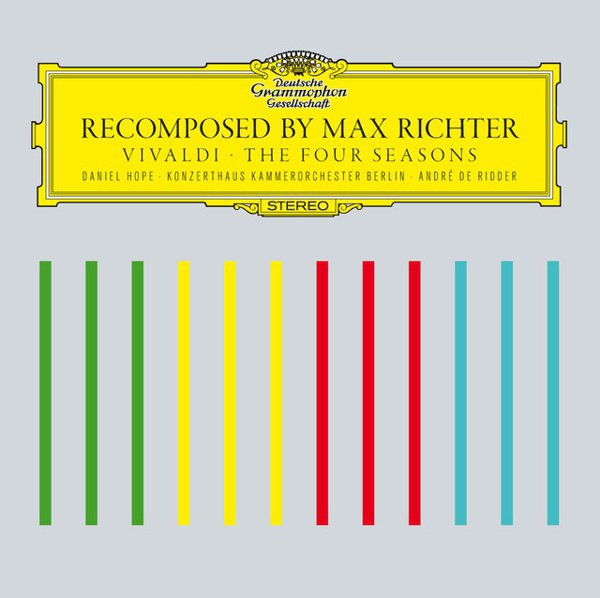
What all of this means is that “recompositions” of existing work have been undertaken throughout musical history, in a huge variety of ways, and have resulted in a huge diversity of manifestations, from reorchestrations to electronic remixes to new applications of existing techniques. There’s every reason to expect that this diversity will only continue to expand.